












Product Description
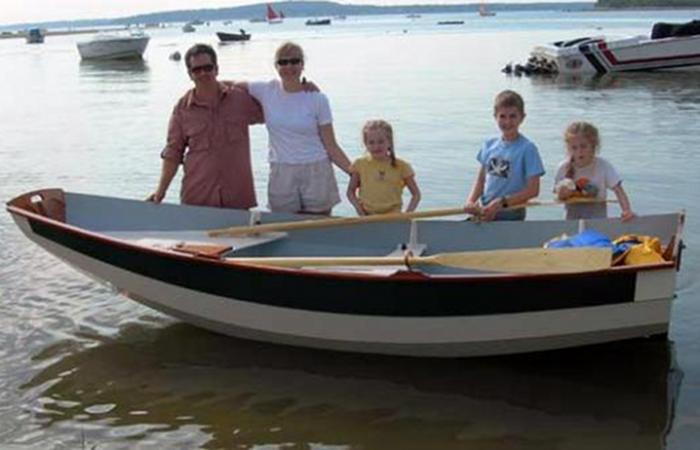
The Passagemaker Dinghy is easy to build but looks great and performs beautifully while carrying up to three large adults. A smooth glide when rowing, spirited performance when sailing, and steady handling with an outboard mark this build-it-yourself boat kit.
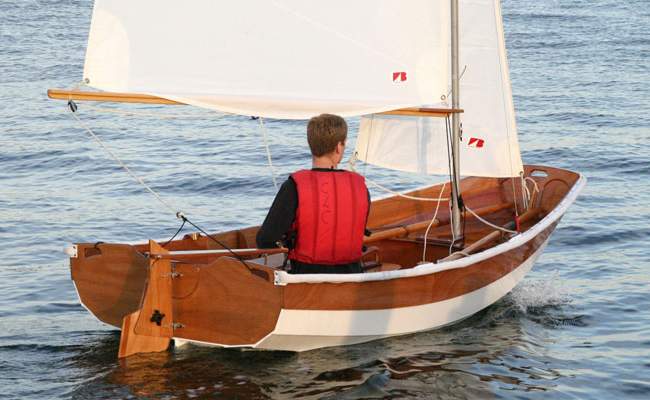
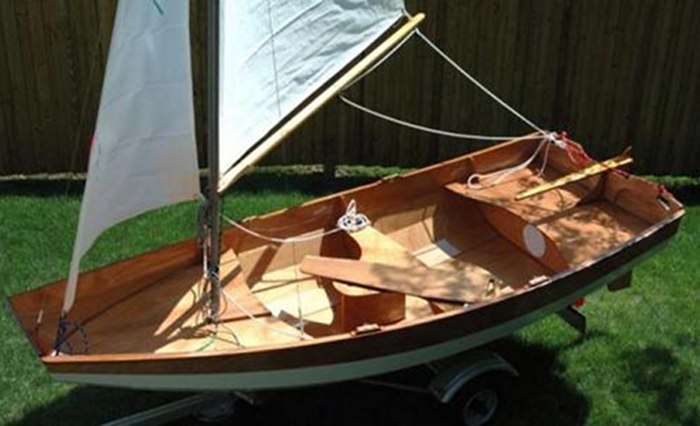
This is the perfect dinghy for those with larger boats. Are you tired of moving heavy, traditional dinghies that weigh 200 lb, or struggling with a limp, awkward inflatable that can't be rowed or sailed? This elegant, Norwegian-styled pram weighs only about 90 lbs (41 kg), but can survive real abuse in the dinghy park. With a 650 lb (294 kg) payload, the Passagemaker can haul the entire crew in one go, or gear from the quayside to the mothership. The sailing rig components store flat inside the hull; fasten three shrouds and the mainsheet, hoist up the mainsail and jib, and you've got a fast, fun, stable sailing dinghy that will please even the most ardent and discriminating sailing enthusiast.
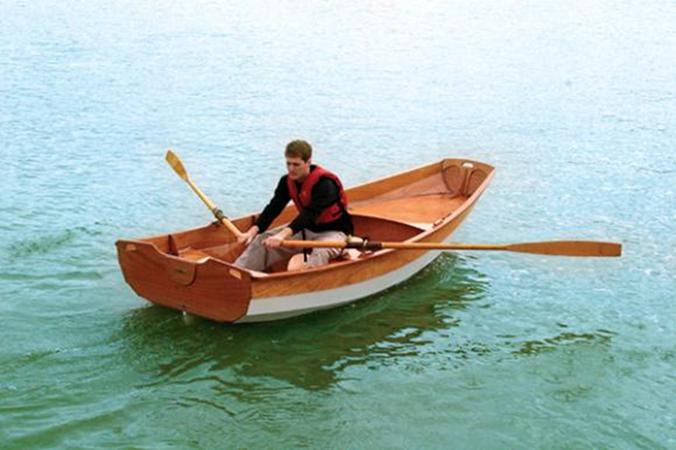
If you have a long harbour to cross, a 2, 3, or 4 horsepower outboard will drive the Passagemaker to harbour speed limits and beyond. An electric outboard for fishing lakes will work great, too. If you don't want to lug around a smelly outboard and fuel you'll be delighted to discover how well the Passagemaker rows: there's plenty of rocker for low wetted surface and the transom won't drag in the water to slow you down.
While many Passagemaker builders will be using their boat as a tender to a yacht even more people will be drawn to the design as a fun boat for messing about in. Spend Saturday afternoons gliding around the lake or bay. When you're done, the Passagemaker can be leaned up against the side of the house or wedged into the far corner of the garage.
There is also a take-apart version of the PassageMaker, which can nest to take up less space when stored on the deck of a yacht or in the garage.
We recommend 8ft oars for this boat.
The Passagemaker Dinghy is built in a clinker style using CLC's patented LapStitch™ technique, which yields a rigid, durable, beautiful hull without resorting to complex moulds. The kit consists of okoume marine plywood panels-computer cut for accuracy, dark wood trim, and all of the epoxy, fibreglass and hardware you'll need. Begin by stitching the hull panels together with copper wire. Then fill the joint with thickened epoxy, and reinforce the bottom with glass fabric on the inside and outside. Add rails and glue the seats into the interior (they form airtight tanks for safety). Standard bottom skids and a big skeg protect the bottom for dragging across gravel beaches. Finish by coating the entire hull in several layers of clear epoxy for a durability and low maintenance, then sand and apply paint and varnish.
The panels on this kit are pre-drilled and the bulkhead positions are pre-marked so that it is possible build the boat without having to measure for locations.
I like just about everything about this design... It's a shippy looking little pram that would be a great way to introduce your kids to boatbuilding.
Robert H Perry, Sailing Magazine.
The Passagemaker Dinghy is well within the reach of first-time boatbuilders. There are no tricky steps and no special tools are needed. Completion will average 100 hours for the sailing version. The daggerboard case is included in the base kit, so you can upgrade to the sailing upgrade at any time in the future.
The rowing hull kit includes:
- Pre-cut wooden panels with pre-cut joints, pre-drilled tie holes and panel location marks
- Epoxy resin and activator
- Epoxy fillers
- Copper ties
- Woven glass fabric
- Woven glass tape
- A pair of silicon bronze rowlocks and sockets
- Daggerboard case, built-in for future sailing upgrade
- Comprehensive building manual
- Free technical support from a competent builder
Broken inwales option
Broken inwales add elegance to any boat by mimicking the ends of the ribs in traditional frame-built boats. This option includes everything you need to install broken inwales in the Passagemaker:
- Pre-cut quarter-knees
- Rowlock riser blocks
- Inwales
- Spacer block material
Some trimming and fitting will be necessary. Broken inwales take longer to install because each block has to be carefully positioned and glued in place. Sanding and varnishing are also made more complex. We recommend reading the installation instructions before deciding to install broken inwales.
Plans and manual
This describes all of the techniques used during the building and also a step by step guide to construction. Scale drawings are used throughout as well as photographs of critical jobs.
This contains full sized drawings of the panels with the cutting instructions so it is possible to build the boat from scratch using these plans and manual. Note that these are large drawings.
Study manual
This is intended for pre-build study or to help with the decision to purchase. Reading this manual will help you decide whether or not you can build the boat. It is the manual that accompanies the kits. It describes all of the techniques that will be used during the building and also a step by step guide to construction. Scale drawings are used throughout as well as photographs of critical jobs.
If, later, you decide to purchase the kit the cost of this printed manual will be deducted from the kit price.
This does not contain the plans of the panels with the cutting instructions so it is not possible to build the boat from scratch using only this.
PDF study manual
The construction manual for the boat is also available as a PDF download. After credit card authorisation a download link will be sent to the email address put on the order form.
PDF study plans
These study plans are intended to give you an overview of the construction of the boat. They are in PDF format that can be viewed using Adobe Reader. There are two pages and they measure 279 × 216 mm (11″ × 8½″). They can be printed for carrying around.
After credit card authorisation the plans will be sent to the email address put on the order form.
When you have studied the plans, your next step might be to order the printed instruction manual, which will walk you through the project step-by-step.
Sailing upgrades
A sailing upgrade can be retrospectively fitted to the PassageMaker rowing hull to turn it into an able sailing boat. There is a standard gunter sloop rig and an alternative lug rig. Either sailing rig can be added to the boat at any time, even years after the rowing version is complete. Please note that the base kit (or a completed hull) is needed in addition to the sailing upgrade.
The larger gunter sloop rig comprises a 58 square foot mainsail and a 19 square foot jib.
The simpler balanced lug rig is quicker to set up, easier to handle and can be reefed or stowed more easily while out on the water. It's not quite as fast as the sloop rig, but it might win if you count setup time on the beach.
The sailing upgrades include:
- Sloop sails or lug sail
- Aluminium mast tube (sloop rig) or wooden mast blank (lug rig)
- Wooden blanks for boom and yard
- Mast step
- Daggerboard blank
- Rudder blank
- Tiller blank
- Blocks and cleats
The sailing upgrades do not include the warp – it is in the rope packages.
Sailing rope packages
The rope packages contain the warp needed to rig the boat. The sloop rig rope package includes sail lacing, main sheet, main halyard, jib sheet and jib halyard. The lug rig rope package includes sail lacing, main sheet and halyard.
- Length
- 3.5 m (11′7″)
- Beam
- 1.4 m (56″)
- Draught
- 152 mm/762 mm (6″/30″)
- Weight
- 41 kg (90 lb)
- Load
- 294 kg (650 lb)
- Build Time
- 8 days
- Build Difficulty
- Moderate
Sloop rig
- Sail Area
- 7.25 m² (78 sq ft)
Lug rig
- Sail Area
- 5.75 m² (62 sq ft)

This boat is also available ready-built.
Recommended Products

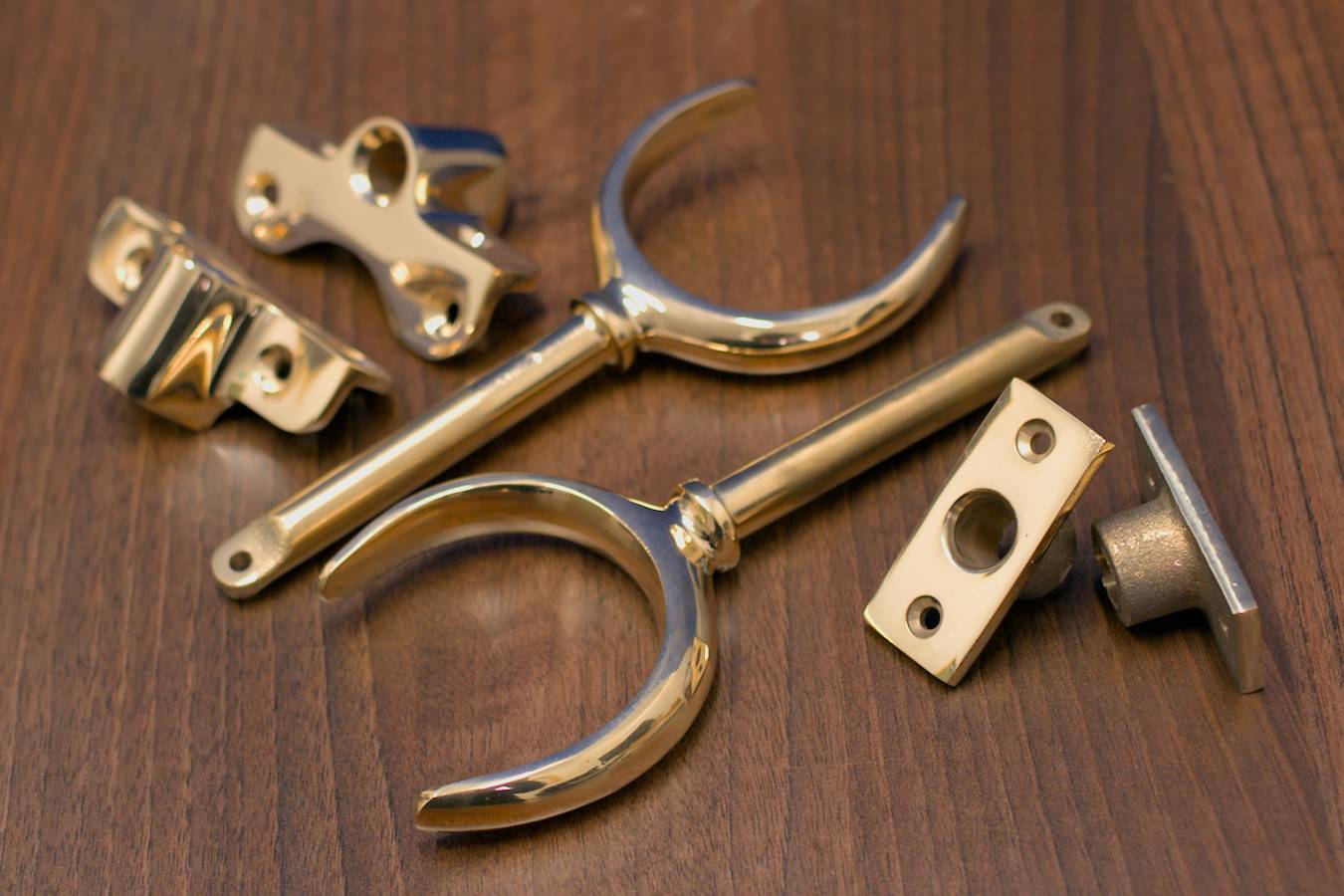
Bronze Open-Topped Rowlocks and Sockets
Open-topped polished silicon bronze rowlocks and matching side sockets or top sockets.
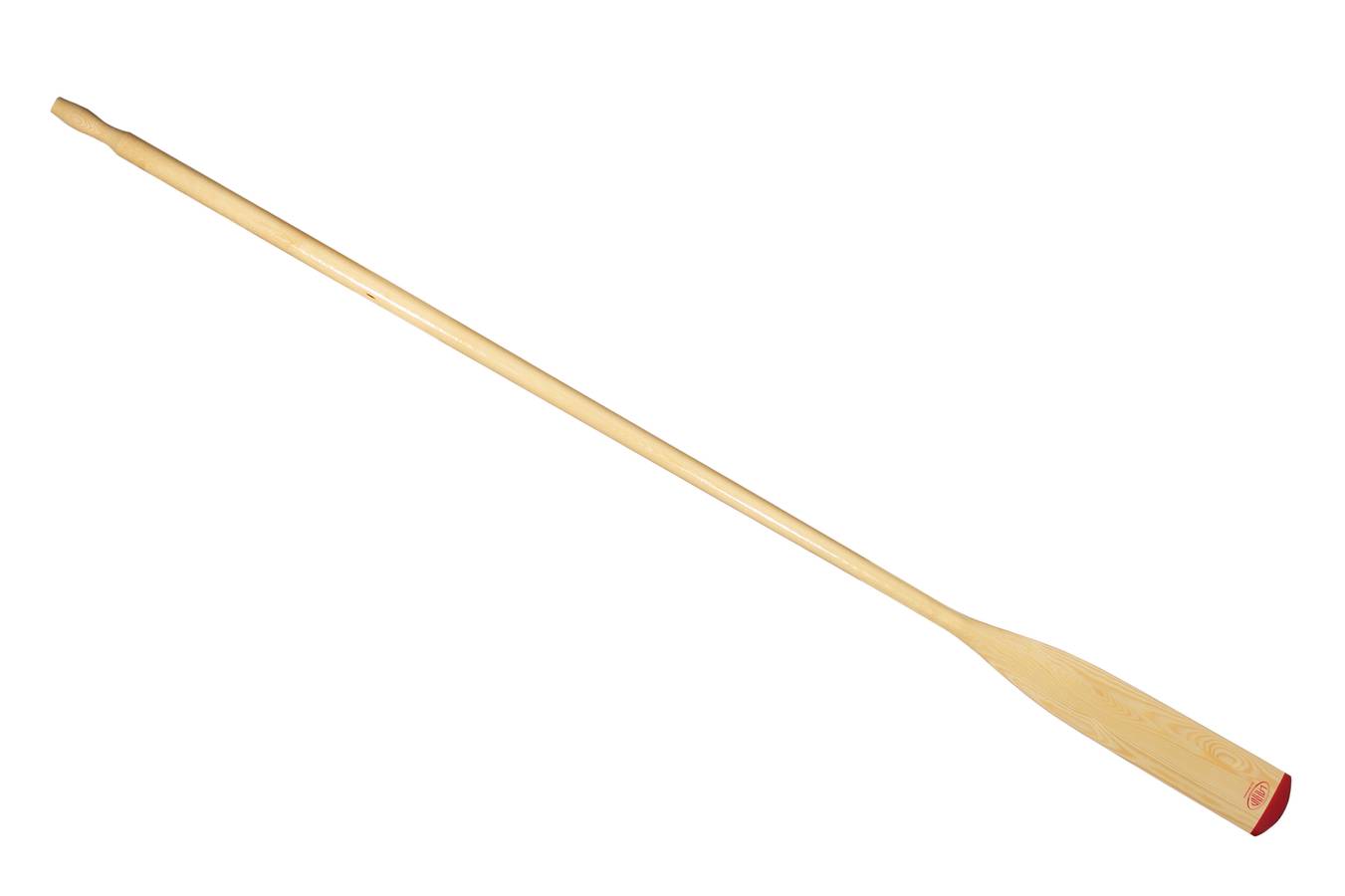
SeaGrade Oars
Elegant, flat-bladed wooden oars with tapered looms for balance and a smooth rowing stroke.

The Working Guide to Traditional Small-Boat Sails
Make your modern sailing boat look (and work) like a salty classic.